Emergencies rarely give you time to think, they demand action. One moment, your colleague is laughing beside you; the next, they collapse without warning. Their heart has stopped. You call for help, but the ambulance is minutes away. What happens in those few moments could decide whether they live or die.
That’s where AED and CPR skills come in.
Every year, thousands of people in the UK suffer sudden cardiac arrest outside of hospital, often at work. The British Heart Foundation estimates that 40,000 cardiac arrests happen each year in the community, and survival rates remain shockingly low unless someone nearby acts immediately.
At Jason Rowley, we believe that every employee should have the confidence and skills to step forward in that crucial moment. Our CPR and AED training gives people the knowledge, awareness, and practical ability to save lives, transforming workplaces into safer, more prepared environments.
What are AED and CPR, and Why Are They Life Changing?
Together, CPR and AED use form the foundation of modern emergency response. According to the Resuscitation Council UK, early defibrillation within three minutes of collapse can increase survival chances to over 70%. Without it, survival drops by roughly 10% every minute that passes.
What is AED?
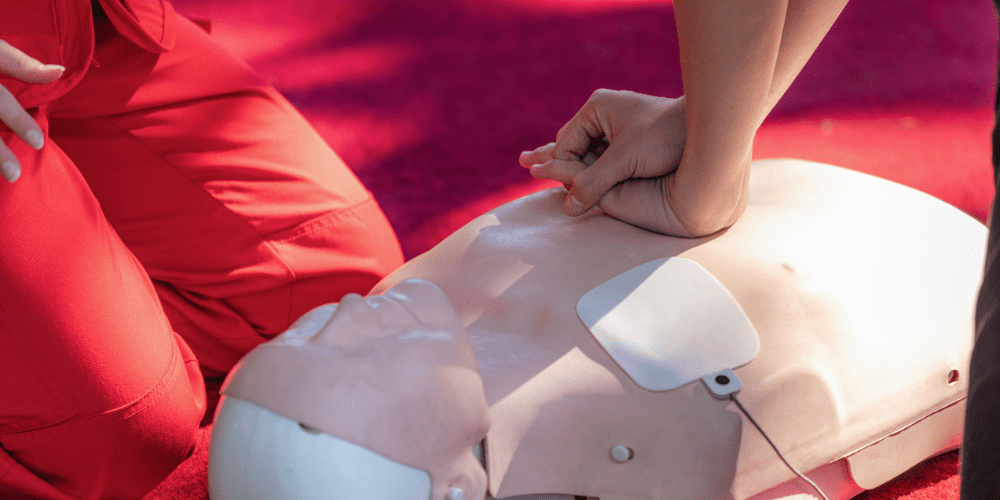
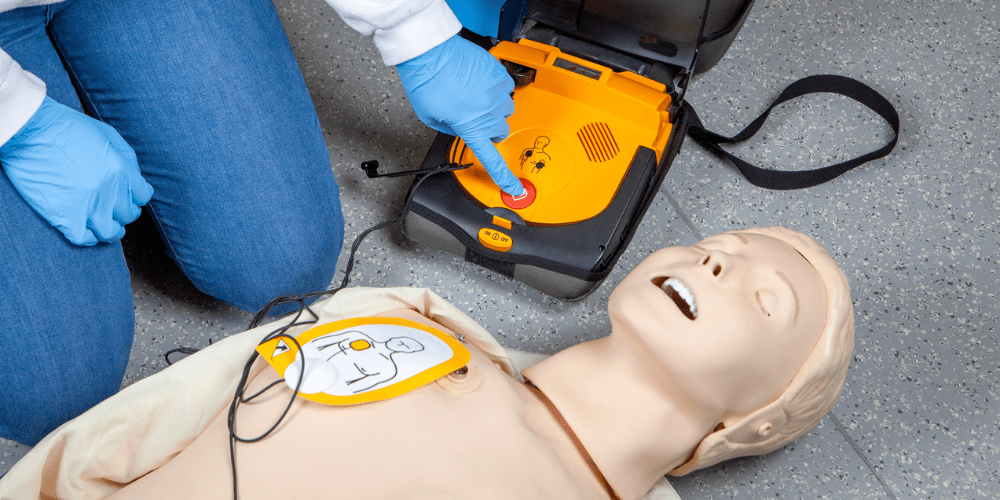
An AED (Automated External Defibrillator) is a portable, easy-to-use device that delivers an electric shock to restart a heart in cardiac arrest. It analyses heart rhythm automatically and guides you through each step with voice prompts, meaning anyone, even without medical training, can use it safely and effectively.
What is CPR?
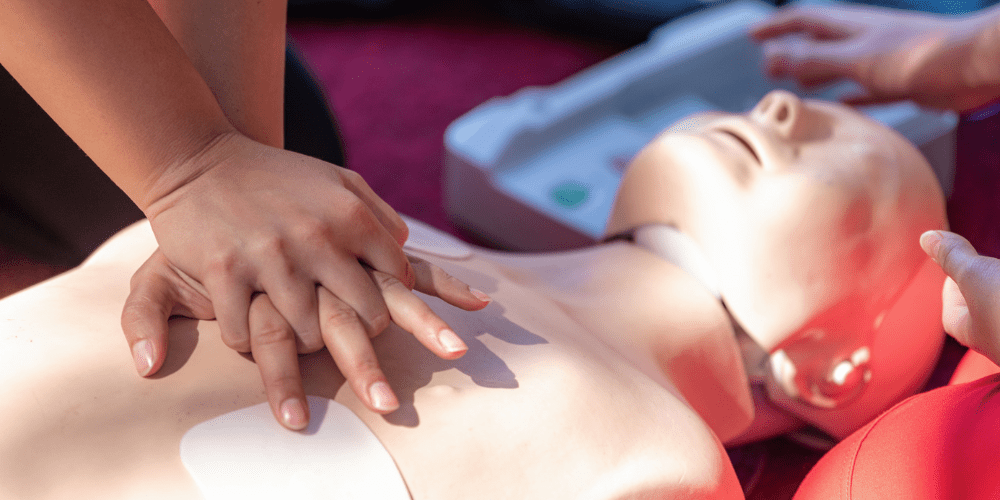
CPR (Cardiopulmonary Resuscitation) is a life-saving technique that keeps oxygen flowing to the brain and vital organs when someone’s heart stops beating. It involves a combination of chest compressions and rescue breaths that effectively act as a manual heartbeat until professional help arrives.
How Common Are Cardiac Emergencies in the Workplace?
You might think cardiac arrest only happens to older adults or those with known medical issues, but that’s a myth. It can happen to anyone, at any time.
Workplaces across every industry, from construction sites and factories to offices, retail stores, and schools, face the same risk. Stress, physical exertion, or even underlying heart conditions can trigger cardiac arrest without warning.
Here’s the reality:
- Over 80% of cardiac arrests happen out-of-hospital.
- In most cases, the first few minutes determine the outcome.
- If CPR and an AED are used before paramedics arrive, survival rates can triple.
By having trained first aiders and accessible AEDs, employers can turn ordinary staff into potential lifesavers.
Why AED and CPR Training Matters for Every Business
There’s no substitute for preparation. In a cardiac emergency, the trained person who steps forward becomes the bridge between life and death.
Here’s what workplace AED and CPR training provides:
1. A Proven Way to Save Lives
Every second counts during cardiac arrest. With the right training, you’ll know exactly what to do, from assessing the situation to delivering compressions and operating the AED confidently. Quick action saves lives. Hesitation costs them.
2. Compliance and Legal Assurance
The Health and Safety (First Aid) Regulations 1981 require employers to provide adequate first aid provision. That doesn’t just mean having a box of plasters, it means ensuring someone on site can respond in a medical emergency. AED and CPR training helps you meet these legal obligations while demonstrating a clear commitment to staff welfare.
3. Confidence and Calm Under Pressure
Panic can paralyse. CPR and AED training transforms fear into focused action. Our practical sessions replicate real-life emergencies, so you’ll leave with the ability to stay calm, composed, and capable under pressure.
4. A Stronger, Safer Workplace Culture
When your team knows they can rely on one another in an emergency, morale grows. Employees feel safer, more valued, and more connected, creating a culture of care that extends beyond the training room.
What’s Involved in CPR and AED Training?
Our AED and CPR training course is designed to be hands-on, practical, and accessible. Whether you’re a complete beginner or refreshing your skills, the course gives you the confidence to act fast and effectively in any cardiac situation.
You’ll learn to:
- Recognise cardiac arrest and other life-threatening emergencies
- Perform high-quality CPR on adults and children
- Use an Automated External Defibrillator (AED) safely
- Manage choking and unresponsive casualties
- Place a person in the recovery position
- Communicate with emergency services effectively
- Understand your role as a workplace first aider
Training is delivered face-to-face by experienced instructors following HSE and Resuscitation Council UK guidelines. You’ll practise with real AED equipment, work through realistic scenarios, and receive feedback from certified professionals.
Each participant receives a CPR and AED completion certificate, valid for three years.
The Importance of AED and CPR Training for Legal Compliance in the Workplace
In the UK, employers have a legal duty of care to ensure that appropriate first aid measures are in place. AED and CPR training forms a key part of meeting this obligation. It provides proof of compliance with workplace health and safety standards, ensuring that your company is prepared for emergencies.
It’s not just about ticking a box, it’s about creating a workplace where safety is more than policy; it’s practice.
Having trained first aiders and accessible defibrillators also improves your company’s public image. Clients, partners, and employees see a business that values people over paperwork, and that matters.
How to Implement AED & CPR Training in Your Workplace
Bringing this training into your organisation is simpler than you think.
- Assess your workplace risk: Identify where cardiac emergencies are most likely and who your designated first aiders should be.
- Choose an accredited provider: Select a trusted organisation like Jason Rowley, recognised for industry-compliant instruction.
- Schedule team training: We offer flexible options at your site or our Manchester training centre.
- Equip your site: Ensure AEDs are installed in visible, accessible locations.
- Refresh regularly: Renew training every three years and hold brief refreshers annually to maintain confidence.
With the right preparation, you’ll ensure that every person on site knows exactly what to do if the unthinkable happens.
Take Action and Book AED & CPR Training Today
When cardiac arrest strikes, training is everything. AEDs are simple, but knowing how to use them quickly and effectively saves lives. The same is true of CPR, it’s a skill no one ever hopes to need, but everyone should have.
With proper training, you won’t just meet compliance requirements, you’ll build a safer, stronger workplace culture where every employee has the power to protect others.
Be the reason someone gets a second chance. Join the growing number of UK employers making CPR and AED training a standard part of their safety strategy. Learn more about our AED and CPR training from Jason Rowley today, and consider our Emergency First Aid at Work course also available.
Don’t hesitate to contact our expert team for more information and advice.