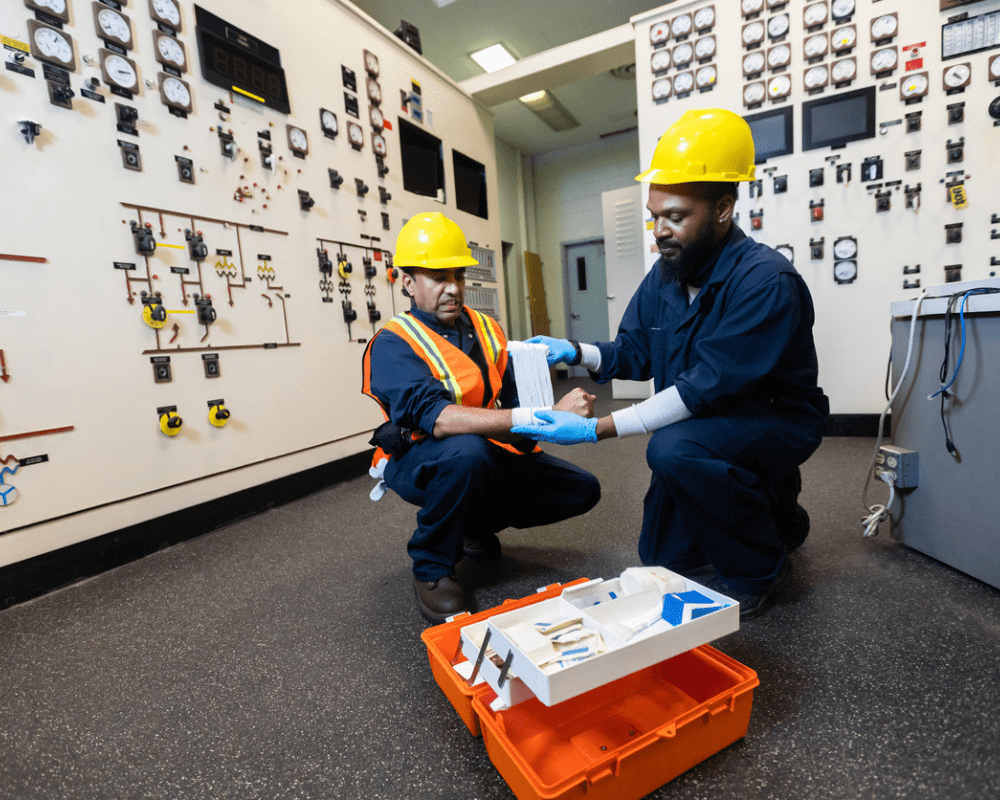

Workplace safety is not just a best practice in the UK – it is a legal responsibility. Whether you run a small office, manage a utilities team, or oversee a construction workforce, you have a duty of care to protect employees and anyone else affected by your work. One of the most important parts of that duty is ensuring appropriate first aid provision is in place.
Emergency First Aid at Work plays a central role in meeting those obligations, particularly in low to medium-risk environments. Yet many employers remain unclear about what the law actually requires, how many trained first aiders they need, and whether Emergency First Aid at Work training is sufficient. This guide breaks it down clearly, so you know where you stand and what action to take.
What the Law Says About First Aid at Work
First aid requirements in the UK are governed by the Health and Safety (First-Aid) Regulations 1981, enforced by the Health and Safety Executive (HSE). These regulations require employers to provide “adequate and appropriate” first aid equipment, facilities, and trained personnel.
Importantly, the law does not give a fixed number of first aiders or a single mandatory qualification. Instead, it places responsibility on the employer to assess risk and put appropriate measures in place. That means first aid provision must reflect the nature of your work, the size of your workforce, and the level of risk involved.
Failing to meet these requirements can result in enforcement action, fines, and increased liability if an incident occurs.
Do All Employers Need Trained First Aiders?
In most cases, yes. While very small, low-risk workplaces may only require an appointed person, the majority of businesses benefit from having at least one trained emergency first aider. An appointed person is not trained to deliver first aid, they are responsible for calling emergency services and managing first aid equipment.
Where there is any foreseeable risk of injury or illness, Emergency First Aid at Work training is widely recognised as the minimum standard. It ensures someone on site can respond effectively while professional help is on the way.
This is especially relevant for employers in utilities, engineering, warehousing, logistics, construction support roles, and office-based teams with lone working or shift patterns.
What Is Emergency First Aid at Work Training?
Emergency First Aid at Work is a one-day qualification designed to give individuals the essential skills needed to deal with workplace emergencies. It focuses on immediate response rather than long-term casualty care.
Those who complete recognised Emergency First Aid at Work training learn how to assess incidents, provide life-saving assistance, and manage common workplace injuries safely and confidently. Certification is valid for three years and is widely accepted by employers and enforcing bodies.
Jason Rowley Ltd delivers accredited Emergency First Aid at Work training that meets HSE requirements and is suitable for a wide range of workplaces. You can learn more about our Emergency First Aid at Work training today.
When Emergency First Aid at Work Is the Right Course
Emergency First Aid at Work is typically appropriate for:
- Offices and administrative workplaces
- Retail environments
- Low-risk utilities and engineering roles
- Small teams with limited exposure to hazards
It is also often used as a stepping stone for individuals who may later progress to full First Aid at Work qualifications.
For higher-risk environments, employers may need additional training, but Emergency First Aid at Work remains a crucial foundation. Many organisations also combine it with broader first aid and AED training to strengthen emergency response capability.
How Many Emergency First Aiders Do You Need?
There is no single answer. The HSE expects employers to consider:
- Number of employees
- Shift patterns and lone working
- Workplace layout and access to emergency services
- History of accidents or ill health
In many cases, having more than one trained emergency first aider is recommended to ensure cover during holidays, sickness, or off-site working. This is particularly important in utilities and infrastructure roles where teams may be spread across sites.
Consequences of Inadequate First Aid Provision
When employers fail to provide suitable first aid cover, the risks extend beyond legal compliance. Delayed response can increase the severity of injuries, prolong recovery, and in worst-case scenarios, cost lives.
HSE inspections frequently highlight inadequate first aid arrangements as a contributing factor in workplace incidents. Having trained emergency first aiders demonstrates a proactive approach to safety and reduces exposure to enforcement action.
How Training Supports Compliance and Confidence
Emergency First Aid at Work training does more than tick a compliance box. It builds confidence, improves decision-making under pressure, and empowers staff to act quickly and effectively.
Employees who complete training understand how to:
- Conduct a primary survey
- Manage unconscious casualties
- Control bleeding and shock
- Respond to sudden illness
When combined with AED and CPR training, workplaces are better prepared for cardiac emergencies, which remain one of the leading causes of sudden workplace fatalities.
Get in Touch for More Advice on Emergency First Aid at Work
Emergency First Aid at Work is not optional for most organisations, it is a practical, proportionate response to real workplace risks. Investing in the right training protects people, strengthens compliance, and demonstrates genuine commitment to safety.
If you are reviewing your first aid arrangements, explore Jason Rowley Ltd’s Emergency First Aid at Work course, or browse the full range of first aid and AED training options to find the right fit for your organisation.