Working in drains and sewers frequently involves confined spaces, making this one of the highest-risk areas within the utilities and drainage sector. Despite this, incidents continue to occur due to misunderstanding of legal duties, poor risk assessment, or inadequate training. For organisations responsible for sewer and drain operations, understanding what the law requires, and how structured training supports compliance, is critical for protecting people, projects, and reputations.
What Is a Confined Space in Sewer and Drainage Work?
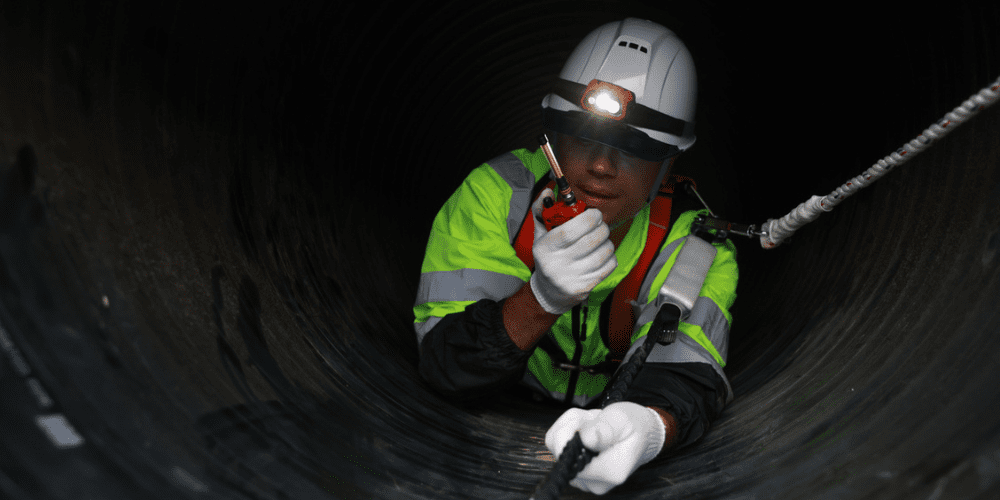
In the context of sewer work, confined spaces are not limited to enclosed tanks or chambers. Manholes, wet wells, pumping stations, inspection chambers, culverts, and underground tunnels all qualify when they restrict access, limit ventilation, or create hazardous atmospheres.
Sewer confined spaces are particularly dangerous because conditions can change without warning. Water levels may rise rapidly, gases can accumulate, and oxygen levels may fall below safe limits. Rescue is also more complex, as access points are limited and external support may not be immediately available.
The Legal Framework Governing Confined Space Entry
The Confined Spaces Regulations place clear duties on employers and contractors. The regulations require that confined space entry is avoided wherever reasonably practicable. Where entry cannot be avoided, a suitable and sufficient risk assessment must be completed, and robust control measures must be implemented.
These requirements sit alongside wider health and safety legislation and environmental law. In sewer environments, legal responsibilities also extend to protecting public health and preventing contamination of clean water networks. Failure to comply can result in enforcement action, prosecution, and severe reputational damage.
Employer Responsibilities in Drainage Confined Spaces
Employers must ensure that all confined space work is properly planned and supervised. This includes identifying hazards, selecting appropriate control measures, and ensuring only competent, trained personnel are permitted to enter.
In drainage environments, responsibility often spans multiple parties. Water companies, local authorities, contractors, and subcontractors may all be involved. Without clear communication and shared understanding, gaps in responsibility can lead to unsafe working conditions.
Training provides a consistent framework that helps align expectations across organisations.
Common Hazards in Sewer Confined Spaces
Sewer confined spaces expose workers to a combination of physical, chemical, and biological hazards. Hazardous atmospheres may contain methane, hydrogen sulphide, or carbon dioxide. These gases can cause unconsciousness or death within minutes.
Biological hazards from wastewater increase the risk of infection, while physical hazards include slips, structural collapse, flooding, and restricted escape routes. Poor lighting and noise further increase risk.
Understanding how these hazards interact is essential. Training helps workers recognise compound risks rather than treating hazards in isolation.
The Risk Hierarchy and Safe Systems of Work
The hierarchy of control underpins all confined space safety. Avoidance sits at the top, followed by substitution, engineering controls, administrative controls, and personal protective equipment.
In sewer work, safe systems of work often include permits, gas monitoring, forced ventilation, isolation of services, and emergency rescue planning. However, systems are only effective if workers understand their purpose and limitations.
Training transforms procedures into practical understanding, ensuring controls are applied correctly under real-world pressure.
How Specialist Training Supports Legal Compliance
Generic health and safety training does not address the specific hazards of sewer confined spaces. SHEA Drains and Sewers training bridges this gap by embedding confined space awareness within drainage-specific scenarios.
The course supports compliance by reinforcing occupational health hazards, environmental awareness, and behavioural decision-making. It also provides recognised evidence of competence for operational site access under EUSR requirements.
For organisations, this demonstrates due diligence and reduces enforcement risk.
What Organisations Gain from Structured Training
Training reduces incidents, improves planning quality, and strengthens safety culture. It also supports clearer communication between teams and contractors.
From a commercial perspective, fewer incidents mean reduced downtime, lower insurance costs, and improved client confidence—particularly important when working for water and sewerage companies.
Consequences of Non-Compliance
Confined space incidents often result in severe injury or fatality. Investigations frequently identify inadequate training, poor supervision, or failure to understand legal duties as root causes.
Beyond legal penalties, incidents can delay projects, increase costs, and damage long-term relationships with clients and regulators.
Book SHEA Drains and Sewers Training Today
Confined space safety in sewer work is not achieved through paperwork alone. It requires structured, sector-specific training that reflects real operational conditions. SHEA Drains and Sewers training supports legal compliance, safer decision-making, and sustainable operations across the drainage and sewerage industry.