
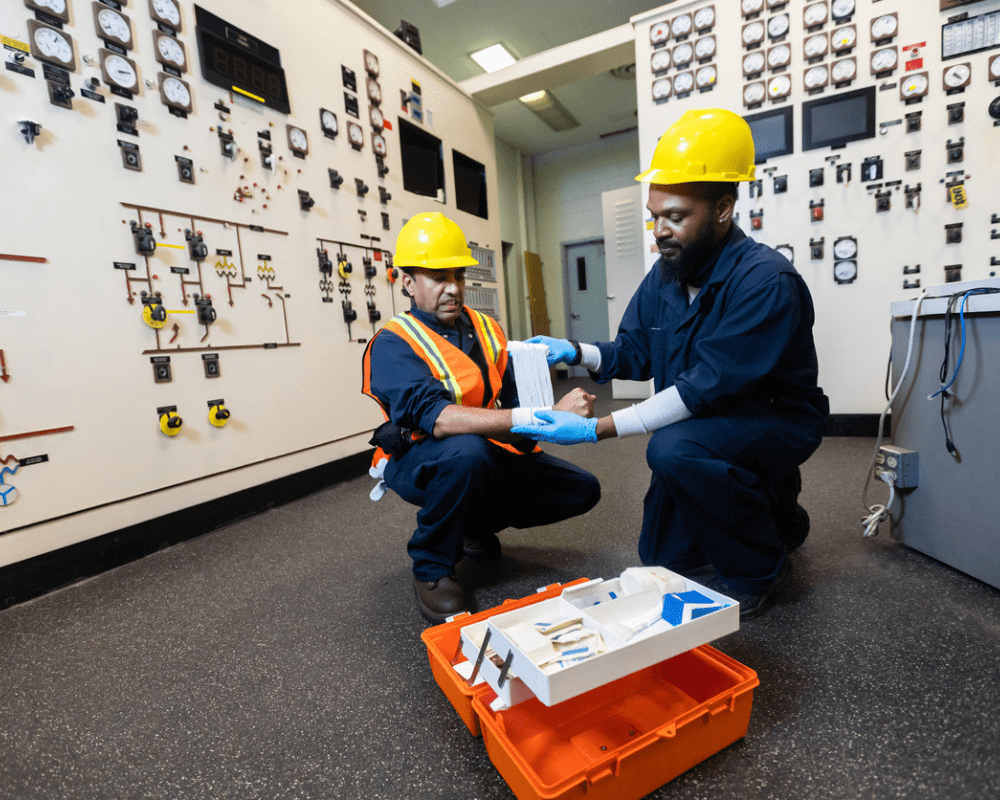
Workplace first aid provision plays a direct role in reducing injury severity and protecting staff. When incidents occur, access to suitable equipment supports immediate action and prevents minor injuries from escalating. Many employers underestimate this responsibility by relying on generic kits that fail to reflect real working conditions.
Effective first aid provision requires more than purchasing a box and placing it on a wall. Employers need to assess risk, choose appropriate equipment, maintain provision, and ensure staff know how to use it. This guide explains how businesses should approach workplace first aid equipment and why training remains a critical part of readiness.
Why Workplace First Aid Equipment Matters
Accidents happen without warning. Cuts, burns, slips, and other injuries occur across all industries. Immediate access to first aid equipment supports early treatment while further medical assistance becomes available.
Delayed response increases injury severity and recovery time. In higher-risk environments, lack of suitable equipment creates serious consequences. Proper provision supports employee welfare and demonstrates employer commitment to safety.
First aid equipment also supports compliance. Employers who fail to provide suitable provision face enforcement action and reputational damage.
Employer Responsibility for First Aid Provision
UK health and safety expectations place responsibility on employers to provide adequate first aid equipment. This responsibility focuses on suitability rather than fixed lists.
Employers must assess workplace hazards and provide equipment that reflects actual risk. An office environment differs significantly from a utilities site, warehouse, or manufacturing facility. Employers who rely on standard kits without assessment often overlook key hazards.
Responsibility applies across all work activities, including temporary work, remote tasks, and contractor operations where employer control exists.
How Risk Assessment Shapes First Aid Equipment Decisions
Risk assessment forms the foundation of effective first aid provision. Employers should consider work activities, injury likelihood, and potential severity.
Work involving tools, machinery, chemicals, or outdoor activity increases risk. Larger workforces require greater provision and multiple access points. Remote locations increase reliance on first aid equipment due to extended emergency response times.
Accident history also provides valuable insight. Reviewing previous incidents highlights common injuries and equipment gaps. Employers should adjust provision accordingly rather than repeat outdated approaches.
Core First Aid Equipment for Most Workplaces
Most workplaces require a base level of first aid equipment capable of managing common injuries.
Wound care items form the core. Sterile dressings and adhesive plasters support bleeding control and protect injuries from contamination. Conforming bandages assist with securing dressings and providing support.
Disposable gloves protect both the injured person and the responder. Cleansing wipes allow basic wound cleaning when water is unavailable. Eye pads provide protection for eye injuries, while triangular bandages support slings and immobilisation.
Each item serves a defined purpose. Employers should avoid overloading kits with unfamiliar equipment that staff lack confidence using.
When Enhanced First Aid Equipment Becomes Necessary
Some workplaces require more advanced provision. Higher-risk activities introduce hazards beyond basic injury.
Burn risks require specialist dressings. Dusty or chemical environments benefit from eye wash solutions. Work involving sharp tools increases demand for bleeding control equipment.
Lone working and mobile teams also require consideration. Portable kits allow workers to carry equipment rather than rely on fixed locations. Vehicles used for work should contain suitable first aid equipment at all times.
Employers should position multiple kits across larger sites to reduce response time and improve accessibility.
Location and Accessibility of First Aid Equipment
Equipment placement determines effectiveness. First aid kits must remain clearly visible, accessible, and unobstructed.
Employers should position kits near higher-risk areas rather than central offices alone. Clear signage supports quick access during emergencies. Staff should receive information on kit locations during induction and refresher training.
Locked cupboards, cluttered storage, or unclear labelling undermine provision and delay response.
Maintaining First Aid Equipment Standards
First aid provision requires ongoing maintenance. Items expire, become damaged, or get used during incidents. Employers must implement regular inspection and restocking routines.
Designated staff should check kits routinely to confirm completeness and condition. Monthly inspections suit most workplaces, while higher-risk settings may require more frequent review.
Inspection records support compliance and demonstrate proactive management. Empty or expired kits expose employers to unnecessary risk.
Who Manages Workplace First Aid Equipment
Employers hold overall accountability for first aid provision. Day-to-day management often sits with trained first aiders or safety coordinators.
Clear ownership prevents confusion. Named individuals should manage checks, replenishment, and reporting of issues. Employers should plan cover during absence to maintain continuity.
Training supports effective management. Staff responsible for kits need confidence in identifying missing items and understanding suitability for workplace hazards.
Why First Aid Training Supports Equipment Use
Equipment alone does not protect workers. Training ensures staff understand how to respond during incidents and use equipment correctly.
Untrained staff often hesitate or misuse items under pressure. First aid training builds confidence and decision-making ability during emergencies.
Jason Rowley Ltd supports businesses through accredited first aid training designed to strengthen workplace response and compliance.
Reviewing First Aid Provision Over Time
Workplaces evolve. Staffing levels change. Work activities shift. Equipment and processes develop. First aid provision must adapt alongside these changes.
Employers should review first aid needs annually at minimum and following incidents, near misses, or operational change. Proactive review prevents gaps and supports continuous improvement.
How Jason Rowley Ltd Supports Workplace First Aid Compliance
Jason Rowley Ltd works with employers across multiple sectors to support effective first aid at work provision and training. Our courses help businesses build confidence, improve response, and meet compliance expectations.
Workplace first aid readiness involves assessment, equipment, training, and review. Employers who address all areas reduce risk and protect their workforce.